
Search Alaska Police Blotter Records
Alaska police blotter records are public documents created by law enforcement agencies across the state. The Alaska Department of Public Safety publishes a Daily Dispatch that serves as the official statewide police blotter for Alaska State Troopers. Local police departments in cities like Anchorage, Fairbanks, Juneau, Ketchikan, Wasilla, and Kenai also keep their own records. To find blotter entries, incident reports, or arrest records in Alaska, you can search the DPS Daily Dispatch, submit a public records request through the JustFOIA portal, or look up cases in the Alaska Court System's CourtView database.
Alaska Police Blotter Overview
Alaska DPS Daily Dispatch Police Blotter
The Alaska Department of Public Safety operates the statewide police blotter at dailydispatch.dps.alaska.gov. This is the main public record of Alaska State Trooper activity. DPS spokesperson Tim DeSpain has described it as "essentially a trooper blotter" that the public and news media can use to learn about incidents of public concern. The site covers all five trooper detachments across the state, and it is free to access without creating an account.
The search tool on the Daily Dispatch lets you filter by date range, enter a text keyword, or look up a specific incident number. Results appear as press releases from each detachment. Detachment A (North) is based in Soldotna and covers the Kenai Peninsula, with posts in Anchor Point, Seward, and Soldotna. Detachment A (South) works out of Ketchikan and covers Southeast Alaska, with posts in Haines, Juneau, Prince of Wales, and Ketchikan. Detachment B is headquartered in Palmer and serves the Mat-Su Valley, including Glennallen and Mat-Su West. Detachment C operates out of Anchorage and handles Western Alaska and the Aleutians, with posts in Aniak, Bethel, Dillingham, Emmonak, Iliamna, King Salmon, Kodiak, Kotzebue, Nome, and Unalakleet. Detachment D covers Interior Alaska from Fairbanks, with posts in Cantwell, Delta Junction, Galena, Healy, Nenana, and Tok.
Each blotter entry includes the incident number, the location and community where the call came in, the type of incident, and a full narrative. The report describes the circumstances of the call, who was involved, what charges were filed, and whether anyone was taken into custody or cited. The system also has a login option for users who need to track multiple reports or save searches over time.
The Alaska DPS Daily Dispatch is the official online police blotter for trooper incidents, updated as new reports come in from each of the five detachments across the state.
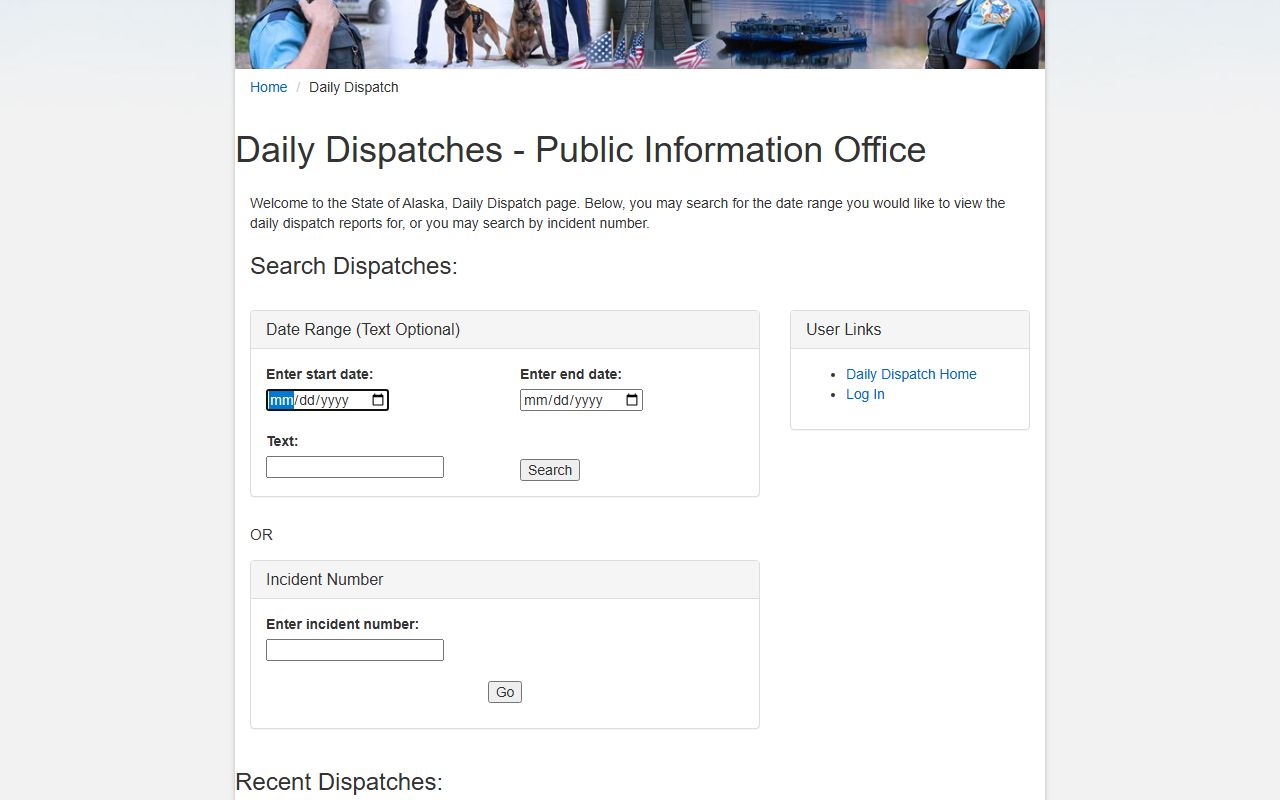
The Daily Dispatch search interface allows date-range filtering, keyword search, and incident number lookup, giving anyone direct access to trooper incident summaries from communities statewide.
Requesting Alaska Police Records Through JustFOIA
For official copies of incident reports, body camera footage, collision reports, or other Alaska State Trooper records, the right tool is the Alaska DPS JustFOIA portal. This system handles formal public records requests for the Department of Public Safety under the Alaska Public Records Act. Anyone can submit a request. You do not need to be a party to the incident, and you do not need to give a reason for asking.
The portal offers three options. The "New Request" button opens a form where you fill in details about what you need. The "Track Status" button lets you check the progress of a request you already submitted. The "Search Archive" button lets you browse documents that have already been processed and released to the public. Creating a free account is required to submit or track requests. The system handles requests for trooper reports, investigative case files, multimedia evidence like body camera video, and crash reports. It serves news organizations, attorneys, insurance adjusters, and private individuals seeking official documentation of law enforcement activity in Alaska.
The Alaska Bureau of Investigation (ABI), which handles major felony investigations statewide, maintains records at each of its posts in Anchorage, Bethel, Dillingham, Fairbanks, Juneau, Ketchikan, Kotzebue, Nome, Palmer, Soldotna, and Wasilla. Records from ABI investigations can also be requested through the JustFOIA system.
The Alaska DPS JustFOIA portal is the official system for submitting formal public records requests to the Department of Public Safety for trooper incident reports, crash reports, and related documents.
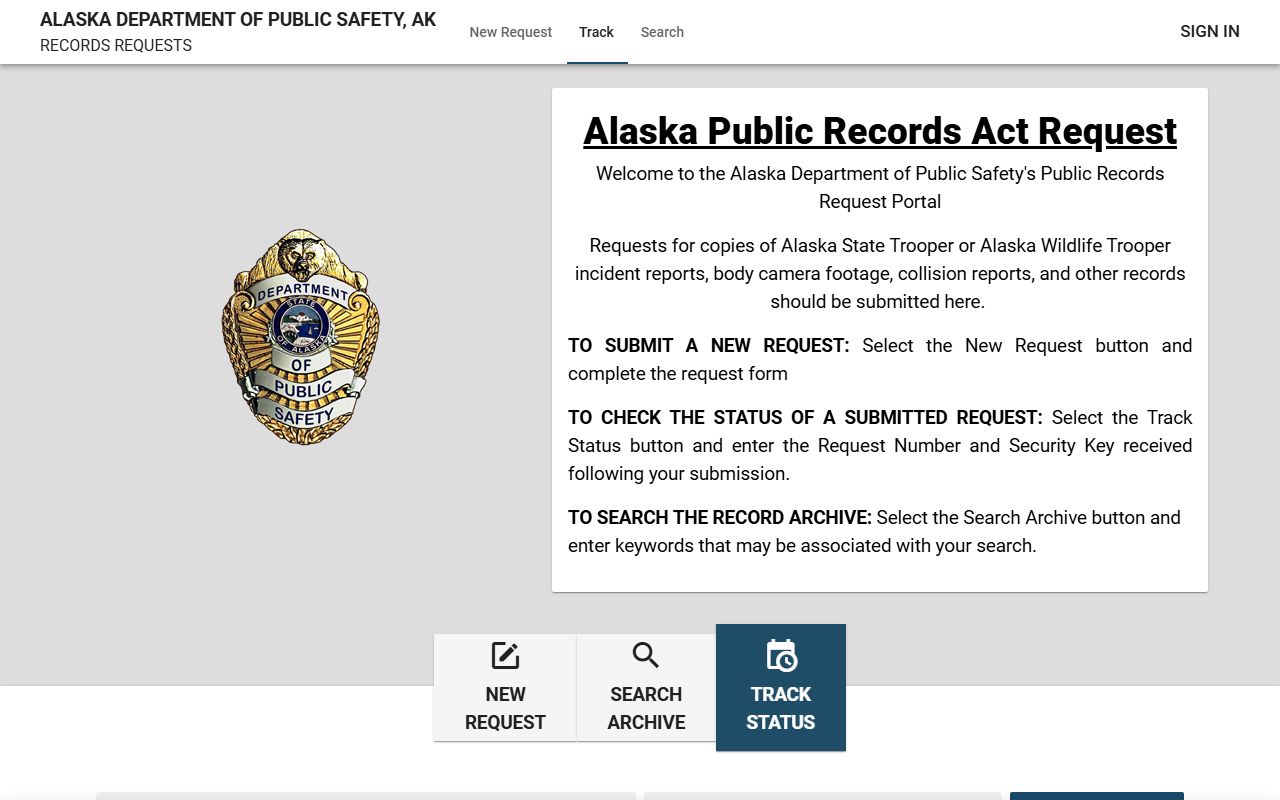
The JustFOIA portal allows requestors to create and track requests, and to search previously released records from the Alaska Department of Public Safety.
Alaska Public Records Act and Police Blotter Access
Access to police blotter records in Alaska is governed by the Alaska Public Records Act (APRA), codified at AS 40.25.100 through AS 40.25.295. The law applies to all state and local government agencies in the state. The default position under APRA is that all government records are public and open to inspection. Any person can ask to see or get copies of records without giving a reason, and without being a party to the incident or case.
Under AS 40.25.110, agencies must respond to records requests within 10 working days. For manual search work, agencies can charge only if the time spent exceeds five person-hours in a calendar month, and only for the time above that threshold at actual salary and benefit costs. Copy fees cannot exceed the standard unit cost of duplication. For electronic records, costs are capped at actual incremental costs. The full regulations covering request procedures and deadlines are found in 2 AAC 96.100 through 2 AAC 96.900.
Not every police record is open to the public. Under AS 40.25.120, law enforcement agencies may withhold records if releasing them could interfere with an active investigation, deprive someone of a fair trial, invade the privacy of a suspect or victim, reveal a confidential source, disclose investigative techniques, or allow someone to circumvent the law. Juvenile records, adoption files, mental health commitment records, and certain victim protection records under AS 12.61.140 are also exempt from public disclosure. The statute makes clear that exemptions are narrowly applied. The burden of justifying a denial rests with the agency, not the requestor.
The APRA information page at the Alaska Department of Law explains the full scope of the public records statute, how agencies must respond to requests, and what records are legally exempt from disclosure.
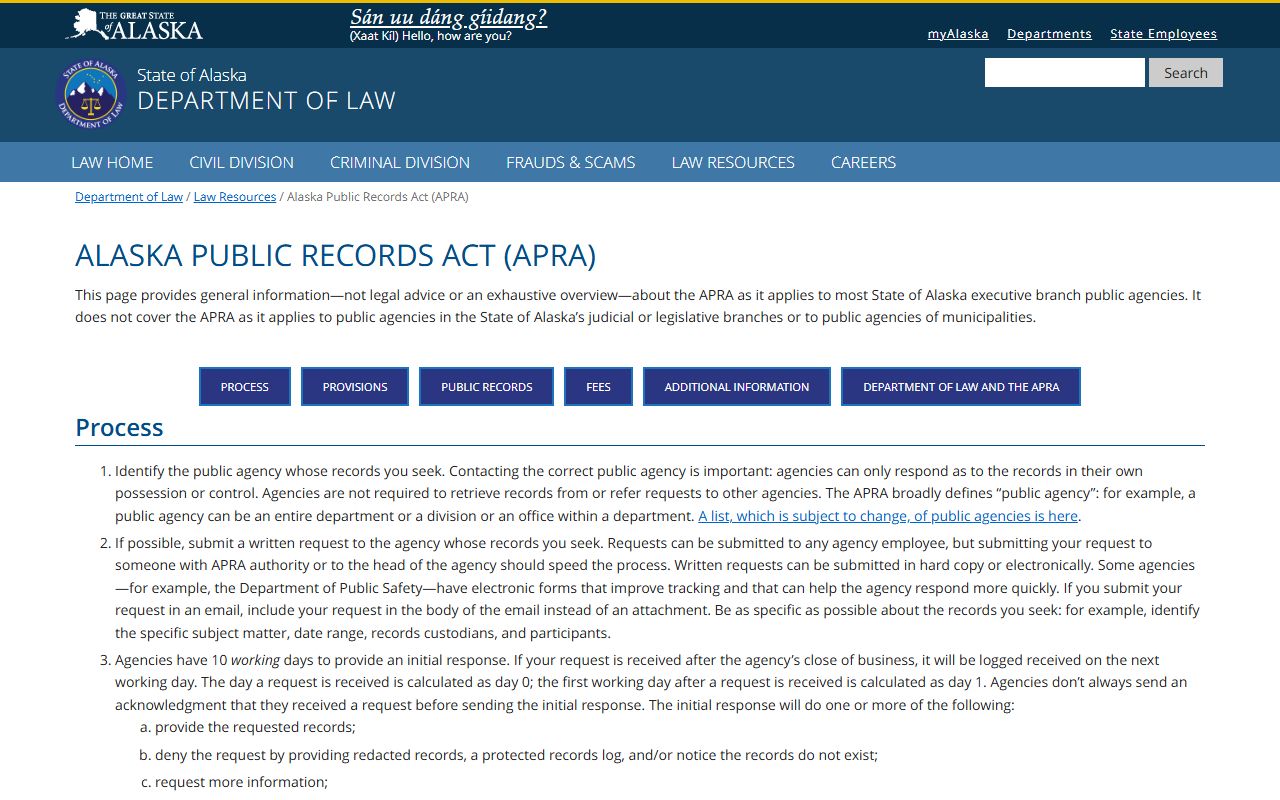
The APRA sets the legal framework for public access to government records in Alaska, including police blotter entries and incident reports held by law enforcement agencies statewide.
Alaska Court Records and CourtView Access
When police blotter incidents result in criminal charges, the court record becomes public through the Alaska Court System. Alaska CourtView is the official public access tool for trial court case information. You can search by case number, party name, or citation and ticket number. CourtView shows case status, hearing dates, docket entries, charges filed, and judgment details for both criminal and civil cases from trial courts across the state. It is available to the public at no charge.
Online Alaska court records generally go back to 1990. Records before 1990 are kept on paper index cards at individual courthouses with limited digital availability. Some older cases may appear in CourtView if they were reactivated at some point after 1990. To access pre-1990 records, you need to contact the clerk at the relevant courthouse directly. Court records include case numbers, names of parties, charges filed, motions and orders, hearing schedules, sentencing details, and final judgments. Restricted records include juvenile cases, family law matters with confidential identifiers, sealed case files, and certain law enforcement records protected by statute.
To request physical copies of court documents, the Alaska Court System uses a set of standardized forms. The TF-311 ANCH form covers Anchorage, TF-311 PA covers Palmer, TF-311 FBKS covers Fairbanks, and the standard TF-311 form works for all other courthouse locations. You can find and download all of these forms at courts.alaska.gov. Audio recordings of hearings can be requested through the clerk's office, although transcript services are handled by private court reporters, not the courts themselves.
Alaska CourtView provides free public access to trial court case records statewide, allowing searches by case number, party name, or citation number.
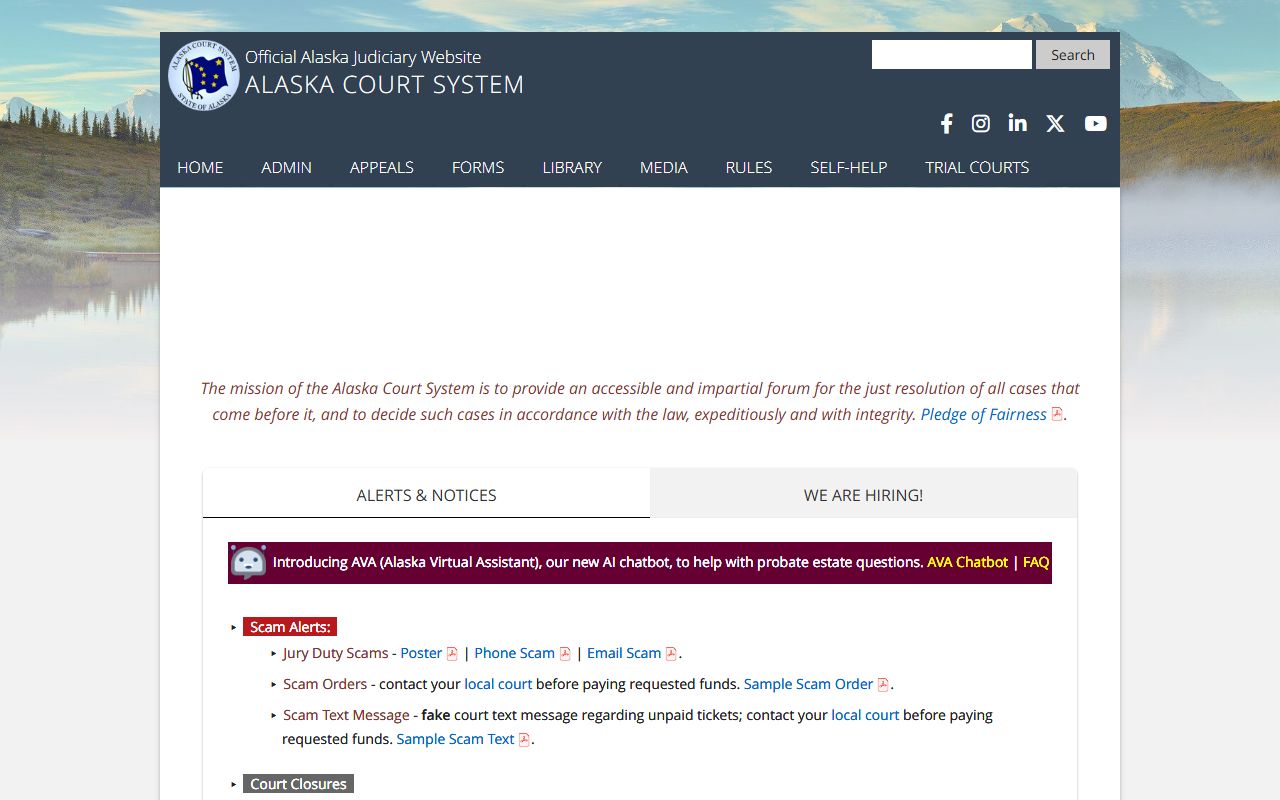
CourtView is maintained by the Alaska Court System and covers criminal and civil trial court records from courthouses across the state, with most records available from 1990 onward.
Alaska Criminal History Reports
Alaska maintains a name-based State Criminal History Report through the Alaska DPS Criminal History Background Check portal, authorized under AS 12.62. To use the online system, you enter a Social Security number and either a state driver's license number or a state identification number issued by the Division of Motor Vehicles. This step verifies your identity before the system processes and releases any criminal history data.
All Alaska Criminal History Reports cost $20 for the initial report, with each additional copy at $5.00. If you do not have a state ID or driver's license number available, you must use an in-person or mail-in option instead. Walk-in requests require two forms of photo ID, with at least one being government-issued. Mail-in requests need payment by cash, check, or money order. Third-party requests require the record subject to sign a consent form and an Unsworn Falsification Statement. The Criminal Records and Identification Bureau within the Alaska Department of Public Safety handles all criminal justice information for the state and processes these requests. Fingerprint-based checks cost $48.25, which includes a $35 state records check and a $13.25 national FBI check.
The Alaska DPS background check portal lets individuals request their own criminal history report online in accordance with AS 12.62.
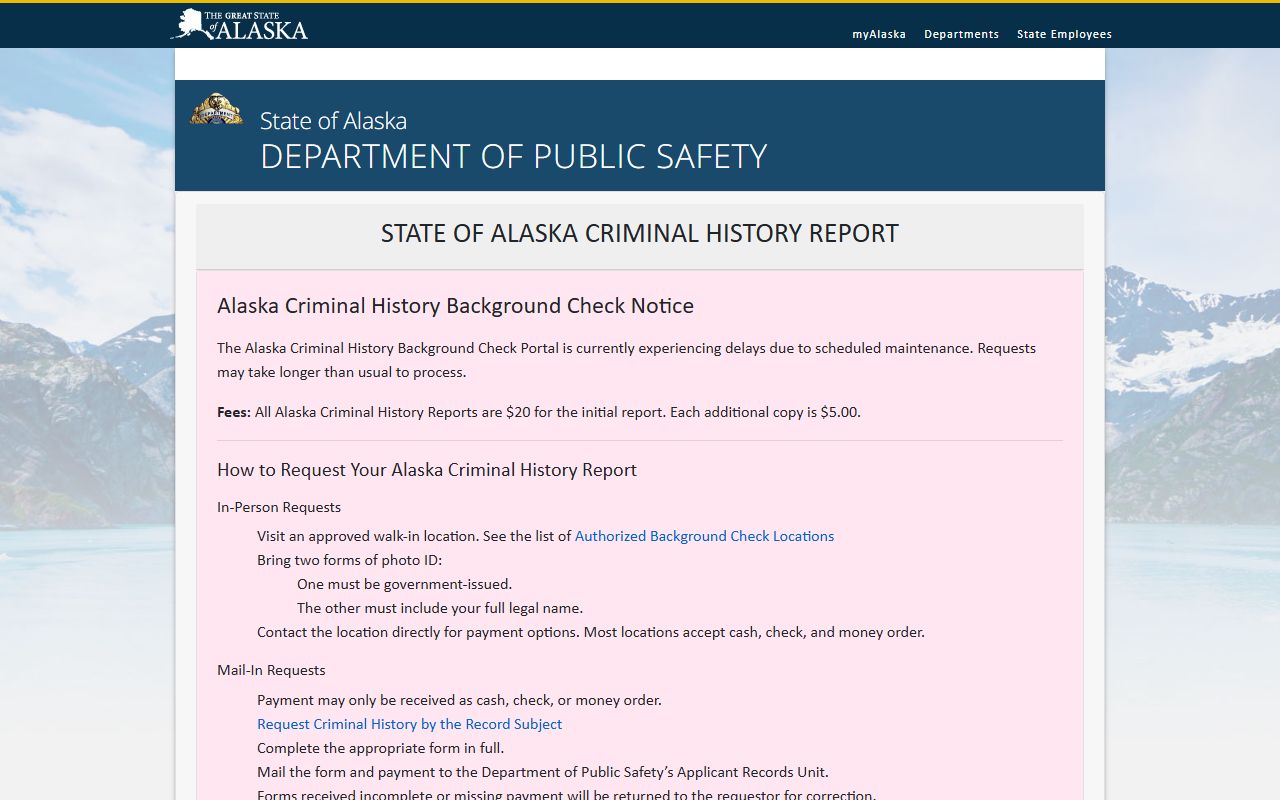
The portal supports self-service email requests for state criminal history reports, with identity verification required to access the data maintained by the Criminal Records and Identification Bureau.
Active Warrants and the Sex Offender Registry
The Alaska Department of Public Safety maintains a public database of active arrest warrants. The Active Warrants search lets anyone look up individuals with outstanding warrants by name or other identifying details. The database shows warrant type, the issuing court, the date issued, charges listed, and bail amounts when available. Law enforcement agencies across the state also have access to this data for warrant service operations. Not every warrant appears in the public-facing database because some are withheld for operational security reasons or by court order. The DPS updates the system as warrants are issued, served, recalled, or quashed by the courts.
Alaska also maintains a public Sex Offender and Child Kidnapper Registry under AS 12.63. The registry provides access to full names, aliases, dates of birth, photographs, physical descriptions, residential and employer addresses, school enrollment, and conviction information for registered sex offenders in the state. Searches can be done by name, city, zip code, or through a map-based tool. The public can sign up for email alerts when an offender registers in a specific area. Registration requirements under AS 12.63 vary based on offense severity, with lifetime registration required for certain convictions. The registry excludes offenders whose only qualifying offense was committed as a juvenile unless they were tried as an adult.
Both databases are managed by the Criminal Records and Identification Bureau and are free to access by the general public without creating an account.
Alaska Bureau of Investigation and Trooper Structure
The Alaska Bureau of Investigation (ABI) is the major felony investigation arm of the Alaska State Troopers. ABI runs several specialized units including the Statewide Drug Enforcement Unit, the Technical Crimes Unit, the Cold Case Unit, and the Major Crimes Unit. The bureau investigates homicides, sexual assaults, drug trafficking, cybercrime, and public corruption cases. Its posts are located in Anchorage, Bethel, Dillingham, Fairbanks, Juneau, Ketchikan, Kotzebue, Nome, Palmer, Soldotna, and Wasilla. Each post has statewide jurisdiction for complex or cross-boundary investigations. ABI also coordinates with federal agencies including the FBI, DEA, and Homeland Security Investigations on multi-jurisdictional cases.
For an overview of how trooper detachments and posts are organized, the Alaska State Trooper Detachments page at dps.alaska.gov lists all detachment headquarters and their sub-posts with geographic coverage descriptions. This helps locate which trooper post handles incidents in a given community. In areas without a municipal police department, which includes much of rural Alaska, the trooper post is the primary source for police blotter records and incident report requests.
Citizens can also submit a report for minor incidents through the online crime reporting tool at dps.alaska.gov/ast/crimereport. The system is designed for minor property crimes and non-emergency incidents that don't require an immediate trooper response. After submission, the system assigns a report number you can use for your own records or for insurance claims.
Historical Police Records at the Alaska State Archives
For older law enforcement records that are not available through current digital systems, the Alaska State Archives is the right resource. Located at 395 Whittier Street in Juneau, the archives maintain historical government records from state and territorial agencies, including law enforcement files. The collection includes territorial court records, early Alaska State Police records, and historical criminal case files that predate modern computer systems. Many records from before 1990 that are not in CourtView can be found at the archives, including case files from defunct agencies and early statewide law enforcement operations.
Researchers can review online finding aids and catalogs to identify relevant collections before visiting. For materials not yet digitized, in-person visits or research service requests are available. The archives coordinate with the Alaska State Library to support historical researchers. Early birth, death, marriage, and court records from Alaska's territorial period are also part of the collection.
The Alaska State Archives holds historical law enforcement records, territorial court files, and pre-digital criminal case documents not available through online systems like CourtView or the DPS Daily Dispatch.
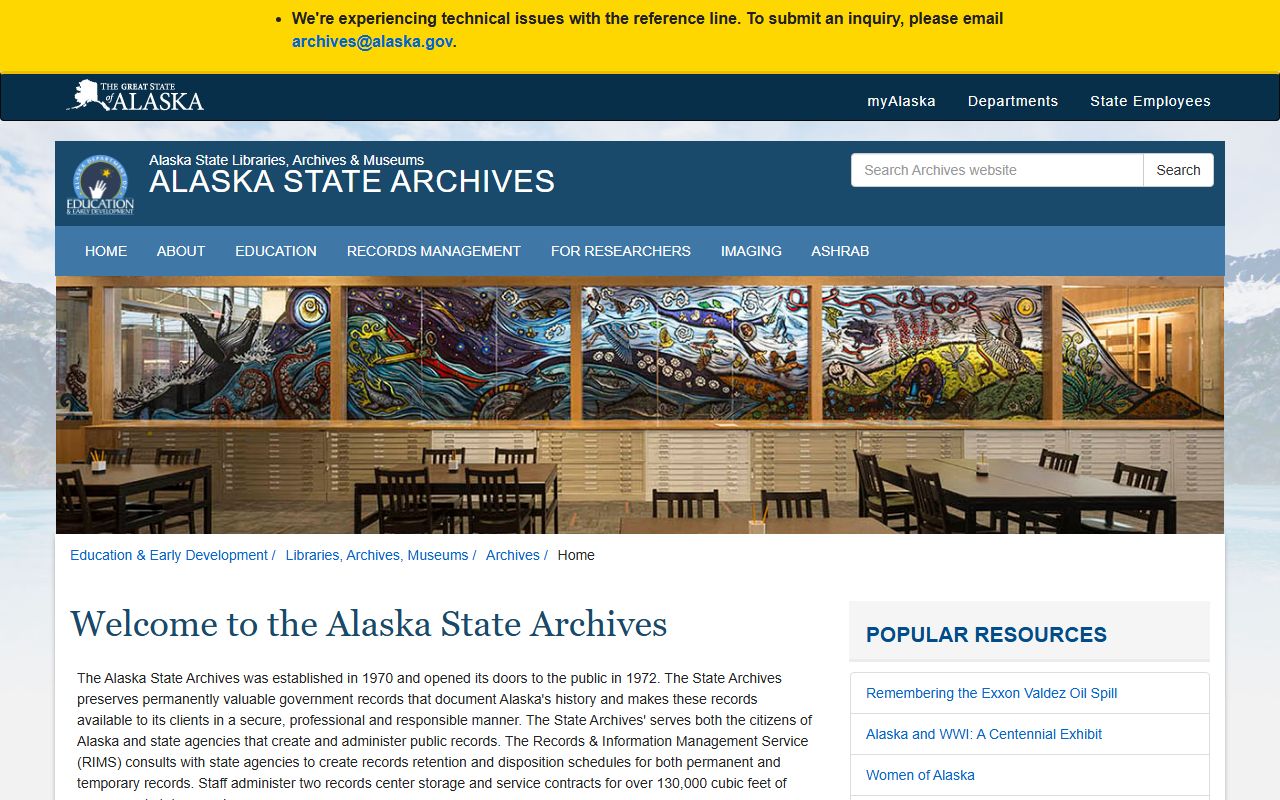
The archives at 395 Whittier Street in Juneau provide access to government records going back to Alaska's territorial period, including early police and court documents not digitized in current systems.
Browse Alaska Police Blotter Records by Borough
Alaska uses boroughs and census areas instead of counties. Each one has its own law enforcement resources and records access points. Select a location below to find local police blotter sources, records request contacts, and court access for that area.
View All 30 Alaska Boroughs and Census Areas
Police Blotter Records in Major Alaska Cities
Major Alaska cities have their own police departments and separate blotter records and public records request processes. Select a city below to find police blotter access for that area.